
Our Story
A Nation based, community driven, family focused approach to achieving full jurisdiction over Secwèpemc Child and Family
Historical
The Secwèpemc have always had our own governance systems or social rules and responsibilities. Family was central to day to day life and families relied upon each other for survival, selecting the most skilled family member to take on specific tasks for efficiency and success. Families lived in villages, communities, and the people within those villages (campfires) governed themselves by adhering to the laws of the Secwèpemc and following the seasonal rounds. In the fall, the families hunt and fish and preserve food for the winter. In the spring, families would gather roots and berries much like in the summer where they would also fish. In the winter, the families would stay together in the pit house to stay warm and safe while story telling would be used for entertainment and teaching. The Secwèpemc did not have a written language except for pictographs, so the stories were used to teach the young people about the expectations, responsibilities and consequences of one’s actions. These stories hold our laws.
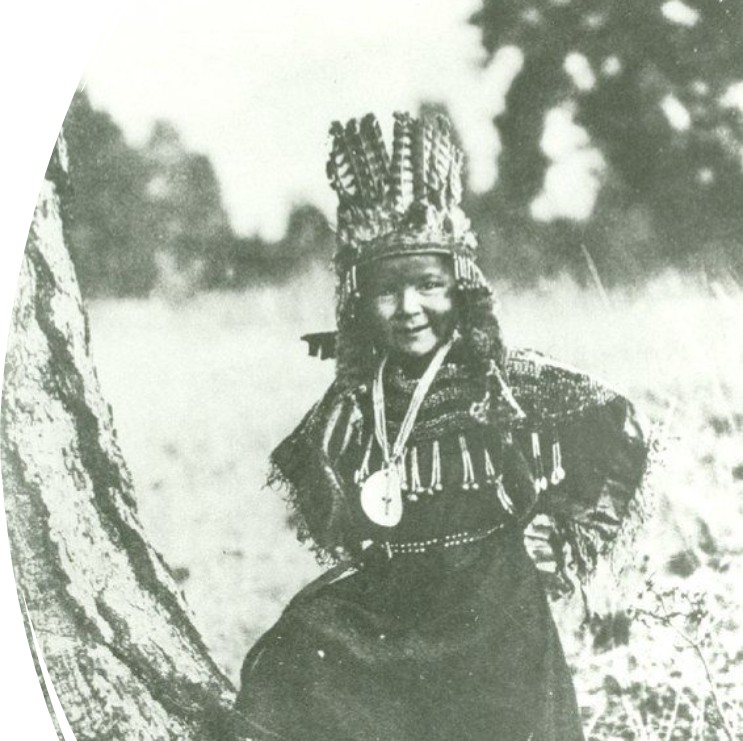
The Secwèpemc have always had our own governance systems or social rules and responsibilities. Family was central to day to day life and families relied upon each other for survival, selecting the most skilled family member to take on specific tasks for efficiency and success. Families lived in villages, communities, and the people within those villages (campfires) governed themselves by adhering to the laws of the Secwèpemc and following the seasonal rounds. In the fall, the families hunt and fish and preserve food for the winter. In the spring, families would gather roots and berries much like in the summer where they would also fish. In the winter, the families would stay together in the pit house to stay warm and safe while story telling would be used for entertainment and teaching. The Secwèpemc did not have a written language except for pictographs, so the stories were used to teach the young people about the expectations, responsibilities and consequences of one’s actions. These stories hold our laws.
Colonialism, Churches and Residential Schools
When the settlers first arrived in our territory, we welcomed them and traded furs for goods that we did not have access to before. Relations were reciprocal and within the bounds of our laws. The Secwèpemc have always been a generous culture, and we shared with the newcomers in an open and kind manner. As more and more settlers came into our territory, our resources began to be depleted, and the settlers saw that we were “in the way” of their taking up our lands and resources. The settlers created a system that was designed to assimilate or destroy our people. The Church was at the center of this system.
The settlers believed that only their god was righteous, and our belief system was not a system that they would recognize. They saw themselves as superior to us, viewed our existence as “savages” and saw our lands as opportunities for themselves to gain wealth. The Dominion government, later the Canadian government, created laws that were designed to take away our access to our own lands, to free up the lands for settlers to occupy and restrict our ability to fight back. They brought sickness to our territory and many of our people died, while others became weak with illness. They imposed their laws, policies and systems on us, taking our belief system and replacing it with their own, the Church ruled with an iron fist and they used fear, physical punishment and violence to control our people. Our children were taken from our homes and sent to Residential Schools where our language, laws and sense of family were stripped from our people.
Over time, we have come to acknowledge the impacts that colonialism, the church and residential schools have had on our people, especially our children and those who did not return from schools. We continue to work as individuals, family members, and community to find a path forward in a healthy and positive way, to recover our culture, language and laws. We are resilient, we are Secwèpemc strong.
Secwèpemc Child and family services
In 1999 the Chiefs of the Shuswap Nation Tribal Council approved a motion that authorized the setup of a Society that would be a delegated agency to administer and manage our Secwèpemc child and family services. Secwèpemc Child and Family Services was established, and staff were hired to operate this agency in coordination with the Province of British Columbia. This delegated agency was meant to be a steppingstone, a temporary agency, with the longer-term goal being to assert our own jurisdiction and manage the child and family services ourselves in our Secwèpemc way utilizing the agency to do so. However, for several reasons, this never happened, and we instead have an agency that is no different than the British Columbia Ministry office.
Stsmémelt Law and jurisdiction
Over the years, there have been different political attempts to reclaim our jurisdiction over our children and family services. In 2009 during a meeting dedicated to child and family concerns hosted at the Coast Hotel in Kamloops, all 17 Chiefs in the Secwèpemc Nation signed a declaration making a commitment to work together to support community initiatives with regard to our Secwèpemc children and families, to work towards, “…long-term sustainability of an effective and efficient Secwèpemc Nation Child and Family Service.” This declaration marked a commitment to advance work that will change the future for our families and children.
In 2010-2013 the Shuswap Nation Tribal Council applied for funds to revitalize our laws and design a Secwèpemc grounded child and family services model. Research of existing documents (stories) and interviews with community members, both young and Elders, took place over the course of three years. The result was a body of work that forms the foundation for the development of our Secwèpemc law for our children and families.
Due to political turmoil (BC government) and funding cuts, the work was stalled for a period. In 2019-2021 the work started up again and the focus was on the development of a law. A call out was sent to each of the 17 Bands and they sought interest for participation in the work. 11 of the 17 Secwèpemc communities indicated an interest in participating in the work. A Stsmémelt Technical Working Group (STWG) was formed with the 11 representatives and together along with staff from SNTC and Bonnie Leonard as legal counsel, the group developed multiple drafts of the law, arriving in 2021 with the final draft. This draft was then presented to each of the 11 communities Chief and Council (their governing body) for approval. The SNTC received BCRs from the communities indicating support for the law. A strategic plan was also developed to help guide STWG in the work.
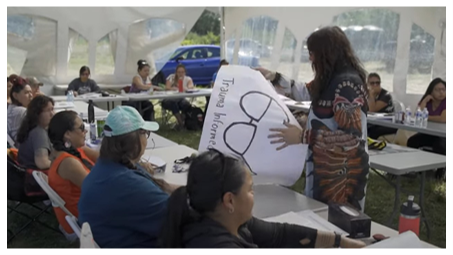
During 2021-2023, STWG has focused it’s attention on capacity development. Learning the law, teaching the law, training on the operational aspects of implementing the law. The STWG also researched traditional governance structures to be the foundation for the operationalizing of the law. Acting upon the research and work by the STWG, a new entity is proposed under the BC Societies Act to be the instrument to utilize to implement the Law. A customized bylaw has been developed for the new entity drawing on teachings from the Story of Porcupine and a Terms of Reference outlining the mandate, accountability and work of the new Yecwemimen (Board).
Briefing Notes have been prepared for each area, Law amendments, Bylaw and Terms of Reference as well as draft Band Council Resolutions. We are asking each community that is supportive of exercising jurisidcition over children and families and utilizing our Secwepemc Law to do so, endorse the Law amendments through the passing of the BCR and select 2 representatives to be Sku7pecan (Board members) of the new entity.
Next Steps:
- Chief and Council pass a BCR to support the proposed amendments and adopt the Law as presented.
- Chief and Council select a community representative to serve as a Skup7pecan (Board member) of the new entity and one person to be an alternate.
- SNTC will submit the necessary documents to have the new entity registered.
- SNTC will assist in the set up and operationalization of the new entity until such time as funding is received and staff are hired to administer the work.
- The Sku7pecan shall receive training on their role, the Law and duties.
The time has come to make our dream a reality. We must declare our law to be operational.